Where does EEOB lead?
Alumni of the Department of EEOB go on to have exciting and fulfilling careers in a variety of fields. Below are just a few examples of our exceptional alumni.
Want to be among our featured alumni? We'd love to hear from you and learn what you have been up to since graduating from OSU EEOB. If you’re interested in being featured, please fill out this form on Google Docs.
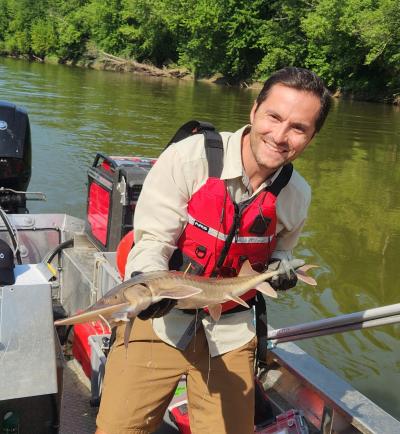
Jonathan Horn is currently the H2Ohio Rivers Program Manager for the Ohio Department of Natural Resources (ODNR). He believes his time in EEOB helped him with network building, skills development, and a variety of experience solving real academic and scientific problems. Jonathan advises current and future EEOB grad students to, "Put yourself and your work in front of as many folks in your intended career path as possible. Networking and relationship development is as important as your academic work. Take time to do internships, volunteer, and do other social and network building tasks that may not advance your dissertation or thesis."
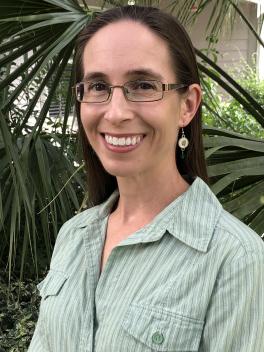
Lara Metrione is Operations Manager for the South-East Zoo Alliance for Reproduction & Conservation. She coordinates scientific and business operations through research project management, communicating with zoo and aquarium members about specific reproduction and wellbeing cases, and organizational management, as well as participating in research collaborations. Lara states, "My graduate research was directly related to the same type of studies in which I and the company I work for are engaged, thus my time in EEOB provided the knowledge and training that are foundational to my career." She advises current and future EEOB graduate students to pick a research area that they are passionate about so that, when the inevitable challenges and obstacles occur, they are motivated to keep exploring.
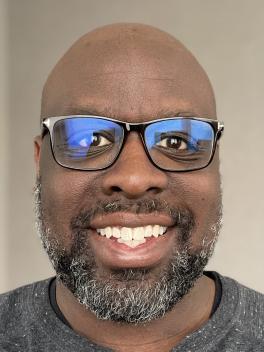
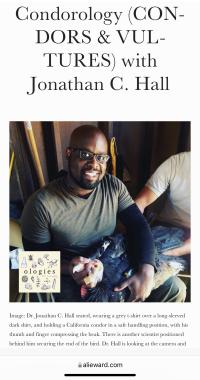
Jonathan Hall is currently an Associate Professor of Biology at Eastern Michigan University. Jonathan states, "OSU EEOB helped prepare me for a career in academia through a rigorous formal education and valuable informal education. I learned a lot from the professors and also my peer graduate students. I developed a passion for teaching and learned that I was capable of high-quality scholarship...My general advice is to say yes to opportunities and focus on building and maintaining your network. I have my current job because of the contact I maintained with graduate school peers in the EEOB program. My advice for underrepresented students in this field is more specific, detailed, and nuanced. I'm open to having that conversation with such students if requested." You can read more about his research on his website.
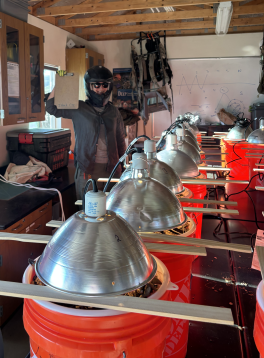
Sarah Cusser is a Terrestrial Invertebrate Conservation Ecologist at the Santa Barbara Botanic Garden where she leads insect-plant interaction studies to advance biodiversity conservation, habitat restoration, and urban habitat creation. Sarah states EEOB prepared her to start her PhD and execute field work. She advises current and future EEOB graduate students to adopt the following: "If something's going wrong, deal with it as soon as possible (don't put it off)."
Find out more about Sarah's work on the Santa Barbara Botanic Garden website.
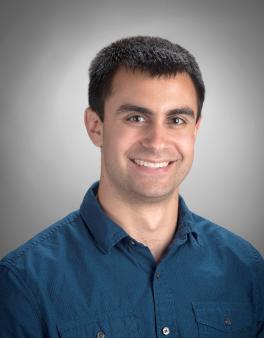
Alex Champagne is an Associate Professor of Biology at the University of Southern Indiana, a regional public university that serves primarily undergraduate students. Alex teaches and conducts research with undergraduates. His general field of study is evolutionary and ecological physiology, with a focus on how the properties of lipid membranes regulate physiological processes such as evaporative water loss and metabolism. Alex states, "My time as a PhD student in EEOB taught me how to be an effective teacher, researcher, and mentor, and it also taught me a lot about myself and the kind of person I wanted to be going forward. The lessons I learned as a graduate student clarified my career goals and gave me a growth mindset. Along the way, I developed lifelong friendships and collaborations!" He encourages current and future EEOB graduate students to, "Set your own goals, and don't worry about what everyone else is doing or accomplishing. It's easy to feel like you're not doing enough. There are going to be highs and lows as you go through graduate school, and everyone experiences those at different times!" Find out more about Alex's teaching and research on the University of Southern Indiana's website.
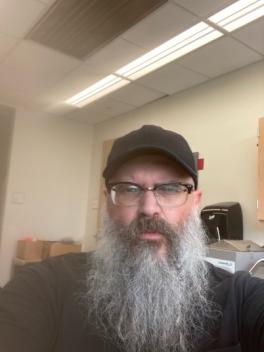
Christopher Randle is a Professor in Biology at Sam Houston State University, an R2 university in Huntsville, TX. His day to day includes a balance of teaching and research, mostly with undergraduate students and masters students. In the last 20 years Chris has worked on a lot of different kinds of projects, mostly on the ecology and systematics of parasitic plants, but also on population genetics of turtles and fishes, forensic analysis of molecular data, phylogenetic theory, and most currently invasion biology using ecological niche models. His Ph.D. training in EEOB taught him that, "I can do hard things and that failures are valuable for growth. I was also exposed to many examples of how to be a scientist and an educator, which have helped me craft my own approach to my profession." He advises current and future EEOB graduate students to "work hard and have fun." Read more about Chris' research and teaching on the Sam Houston State University website.
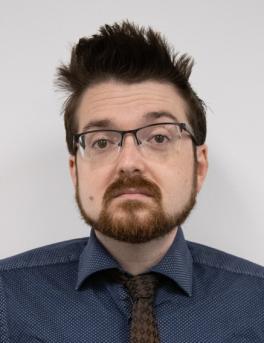
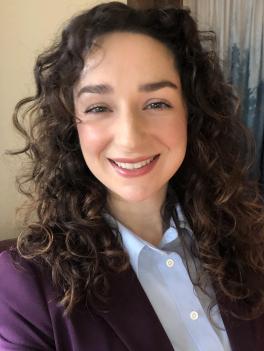
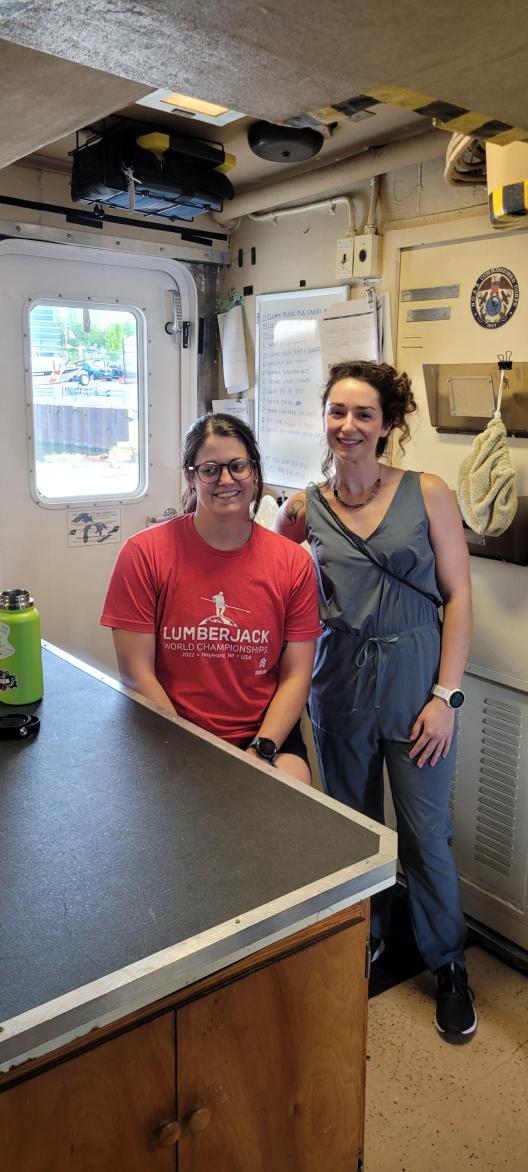
Kali Mattingly is a private contractor for SpecPro Sustainment & Environmental, whose work supports the United States Environmental Protection Agency (USEPA). She remotely serves as statistician in Duluth, MN Great Lakes research office of USEPA. Kali credits her time in EEOB with her flexibility and problem solving, research and statistics/coding skills, ability to learn new things, and communicating science to fellow scientists of a variety of fields. You can view Kali's profile on LinkedIn.
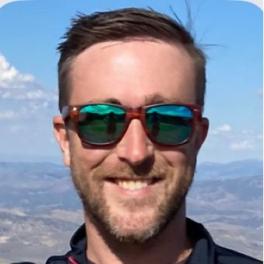
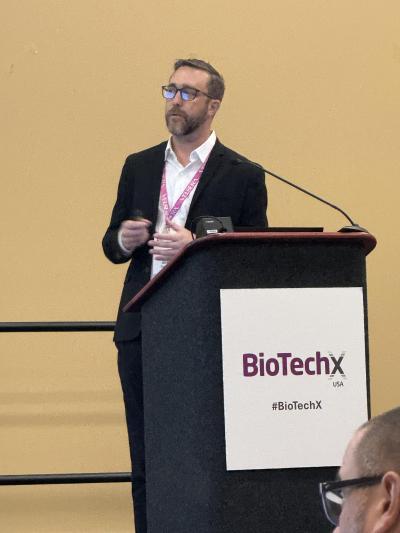
Aaron Wenzel is currently a Scientific Engagement Manager on the commercial team at Seven Bridges Genomics, a cloud-based platform for multiomics bioinformatics analysis. Aaron works with the sales team to qualify deals, preform pre-sales demos, and works with current customers as they have questions/issues on our software platform. His customers are a variety of large pharma, mid-sized therapeutic, and government/academic researchers. Aaron says "My Ph.D. focused on plant evolutionary biology, which I don't use much of today, but a Ph.D. (and specifically the graduate program in EEOB) taught me flexible transferable skills beyond the science I was focused on (communication, writing, scientific engagement, etc)." Aaron advises current and future EEOB graduate students to, "Network, network, network. Regardless of your career goal, it's never too early to lean in and introduce yourself. Lean on the people you know - for example if you see that a colleague is connected on LinkedIn (or another social media platform) to someone you want to meet, reach out. The more you talk to people, the more doors could open down the road, and the better you will be at honing a concise and effective value proposition when you're looking for a job." You can view Aaron's profile on LinkedIn.
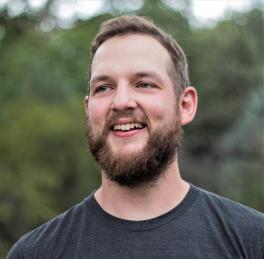
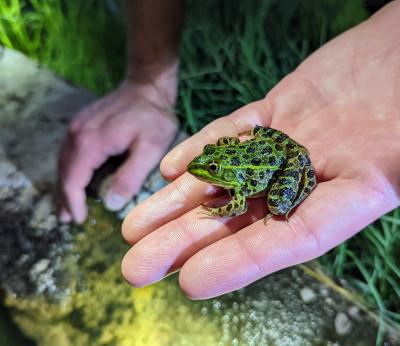
Rob Denton is an Assistant Professor of Biology at Ball State University, a midsized research university, where roughly half of his time is devoted to teaching and half to research. His lab works on problems in the evolution and conservation of amphibians. Rob states, "My time in EEOB helped me gain the confidence to know I could succeed in this career. Support from the university and department allowed me to make new connections beyond campus. My cohort was a strong group of early career scientists who set a high standard." You can read more about Rob's research on his website.