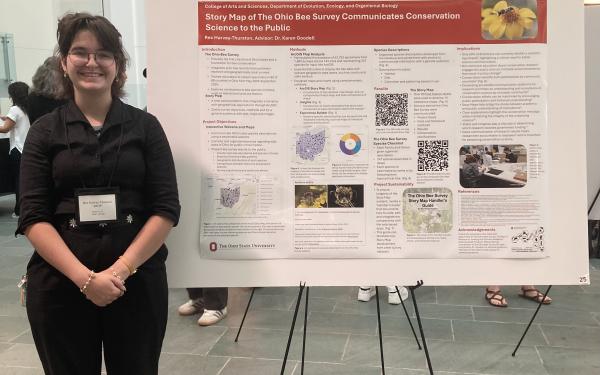
Rex Harvey Thurston— Entomology major, GIS/Molecular Genetics Minor, Class of 2026
Senior entomology major Rex Thurston conducted two independent projects in Dr. Karen Goodell’s lab: “Bee‑ing Informative: Utilizing ArcGIS Story Maps to Communicate The Ohio Bee Survey Results” and “Don’t Let These Species Butterfly Away!” Their work ranged from building interactive ArcGIS story maps to analyzing nearly 6,000 butterfly specimens using R. Rex shared that undergraduate research “helped me build very strong friendships” and taught skills “universally applied to so many jobs,” strengthening their confidence and professional direction. Rex’s research was funded by the Big 10 Alliance Summer Research Opportunities Program (SROP) over two summers.
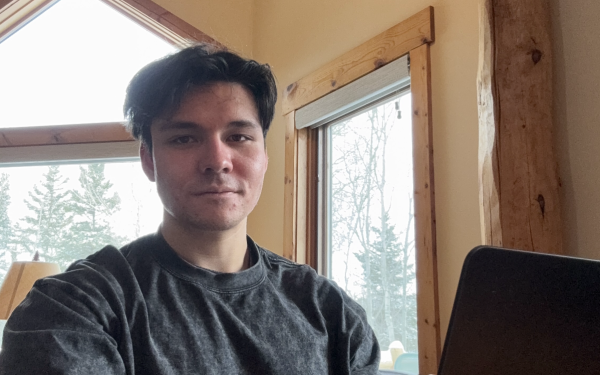
Reid Martin— EEOB major, Class of 2026
Working with Dr. Laura Kubatko, Reid Martin investigated “Gene Tree Composite Likelihood” by comparing composite and full likelihood methods for phylogenetic inference. Using simulations run on a supercomputer, Reid gained extensive coding and analytical experience. He noted that the project strengthened his teamwork and computational skills and could support future career opportunities through possible publication. “Such a great part of my summer!” he added, reflecting on the collaborative and engaging research environment.
Rex Harvey Thurston— Entomology major, GIS/Molecular Genetics Minor, Class of 2026
Senior entomology major Rex Thurston conducted two independent projects in Dr. Karen Goodell’s lab: “Bee‑ing Informative: Utilizing ArcGIS Story Maps to Communicate The Ohio Bee Survey Results” and “Don’t Let These Species Butterfly Away!” Their work ranged from building interactive ArcGIS story maps to analyzing nearly 6,000 butterfly specimens using R. Rex shared that undergraduate research “helped me build very strong friendships” and taught skills “universally applied to so many jobs,” strengthening their confidence and professional direction. Rex’s research was funded by the Big 10 Alliance Summer Research Opportunities Program (SROP) over two summers.
Reid Martin— EEOB major, Class of 2026
Working with Dr. Laura Kubatko, Reid Martin investigated “Gene Tree Composite Likelihood” by comparing composite and full likelihood methods for phylogenetic inference. Using simulations run on a supercomputer, Reid gained extensive coding and analytical experience. He noted that the project strengthened his teamwork and computational skills and could support future career opportunities through possible publication. “Such a great part of my summer!” he added, reflecting on the collaborative and engaging research environment.
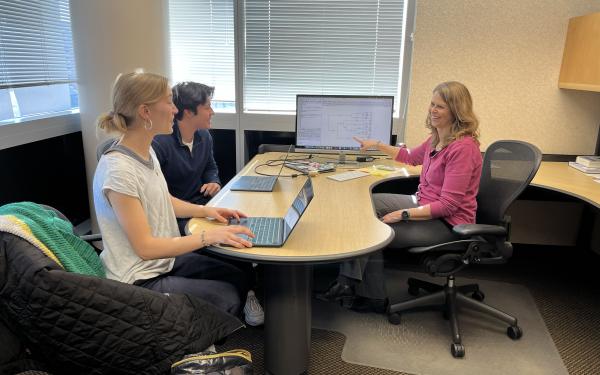
Zoe Henke— Applied Mathematics major, Class of 2026
Zoe Henke worked with Dr. Laura Kubatko on “Phylogenetic Inference with Composite Likelihood”, evaluating statistical methods used to build phylogenetic trees from genomic data. The project helped Zoe discover a passion for mathematical biology and strengthened her confidence in pursuing a PhD. She explained that the work “showed how statistical methods can answer real biological questions” while providing valuable training in data analysis, research methodology, and scientific collaboration.
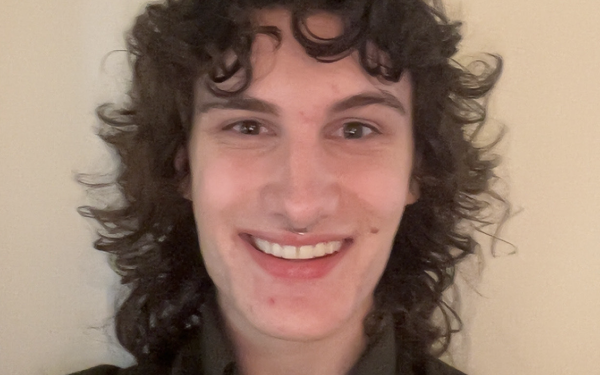
Dillon Skinn— Environmental Science major, Class of 2026
Dillon Skinn worked with Dr. Mandy Slate to examine “How Mutualistic Fungal Relationships Impact Wetland Seedling Water Stress Across Ontogenetic Stages”. By growing seedlings under varied hydrological regimes, Dillon aims to understand how fungal‑plant relationships may support restoration efforts. He shared that the project “helped me develop as an academic researcher through a suite of skills” and has been essential preparation for graduate school.
Zoe Henke— Applied Mathematics major, Class of 2026
Zoe Henke worked with Dr. Laura Kubatko on “Phylogenetic Inference with Composite Likelihood”, evaluating statistical methods used to build phylogenetic trees from genomic data. The project helped Zoe discover a passion for mathematical biology and strengthened her confidence in pursuing a PhD. She explained that the work “showed how statistical methods can answer real biological questions” while providing valuable training in data analysis, research methodology, and scientific collaboration.
Dillon Skinn— Environmental Science major, Class of 2026
Dillon Skinn worked with Dr. Mandy Slate to examine “How Mutualistic Fungal Relationships Impact Wetland Seedling Water Stress Across Ontogenetic Stages”. By growing seedlings under varied hydrological regimes, Dillon aims to understand how fungal‑plant relationships may support restoration efforts. He shared that the project “helped me develop as an academic researcher through a suite of skills” and has been essential preparation for graduate school.
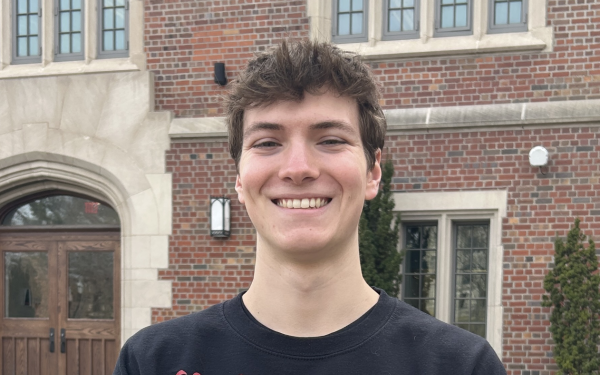
Connor Ferguson— Biology major, Class of 2027
Connor Ferguson worked with Dr. Bryan Carstens on “Studying Intraspecific Variation in Silver‑Haired Bats”. Connor collects specimens from wind farms and museums across the country, analyzing skull morphology and genetic variation to understand geographic patterns. Through this work, he has learned DNA extraction, sequencing, and specimen preparation, noting that the project has taught him “how to collect and analyze data” while contributing to museum‑standard research practices.

Chloe Kenyon— Forestry, Fisheries & Wildlife major, Class of 2027
Chloe Kenyon is conducting her honors thesis with Dr. Bryan Carstens and Jessie Wallace: “Habitat Quality Impacts on the Genetic Structure of Blanchard's Cricket Frogs in Central Ohio”. By combining field sampling, DNA analysis, and GIS‑based habitat metrics, Chloe aims to clarify drivers of regional frog declines. She shared that designing and leading this project is excellent preparation for her goal of entering a PhD program in conservation biology.
Connor Ferguson— Biology major, Class of 2027
Connor Ferguson worked with Dr. Bryan Carstens on “Studying Intraspecific Variation in Silver‑Haired Bats”. Connor collects specimens from wind farms and museums across the country, analyzing skull morphology and genetic variation to understand geographic patterns. Through this work, he has learned DNA extraction, sequencing, and specimen preparation, noting that the project has taught him “how to collect and analyze data” while contributing to museum‑standard research practices.
Chloe Kenyon— Forestry, Fisheries & Wildlife major, Class of 2027
Chloe Kenyon is conducting her honors thesis with Dr. Bryan Carstens and Jessie Wallace: “Habitat Quality Impacts on the Genetic Structure of Blanchard's Cricket Frogs in Central Ohio”. By combining field sampling, DNA analysis, and GIS‑based habitat metrics, Chloe aims to clarify drivers of regional frog declines. She shared that designing and leading this project is excellent preparation for her goal of entering a PhD program in conservation biology.

Liam Andrew Martin – EEOB/Statistics major, Class of 2027
Liam Martin works with Dr. Frances Sivakoff on a project to understand how application of fungicides/pesticides impact bee pollination in greenhouse environments. “My research project is about how the applications of chemical control agents, such as pesticides and fungicides, in a greenhouse environment can impact the pollination behavior of nurtured bees.” Liam plans to pursue a career in research after graduation and has appreciated this entre into ecological research. “Specifically, I want to study insect behavior so this opportunity is an amazing chance to take my first steps into what will hopefully be my future career.” Liam has also appreciated becoming connected with others that share similar research interests. Liam received the Hall Family Scholarship through the EEOB department.
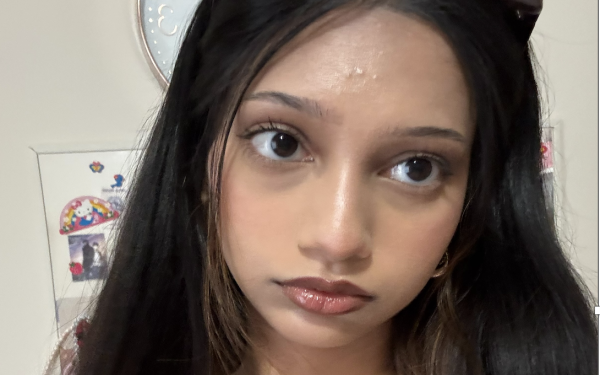
Blessy Christian – Biology major, Class of 2028
Blessy Christian, a Biology sophomore, is conducting research with Dr. Ryan Norris. Their project, “Evolutionary genetics Hyperacrius in Pakistan”, seeks to determine the evolutionary relationships between vole species in the genus Hyperacrius. Blessy indicates that this experiences has helped develop both laboratory and analytical research skills. Looking forward to post-graduate ambitions, Blessy says that the project “gives me hands-on experiences that I can bring with me to PA school.”
Liam Andrew Martin – EEOB/Statistics major, Class of 2027
Liam Martin works with Dr. Frances Sivakoff on a project to understand how application of fungicides/pesticides impact bee pollination in greenhouse environments. “My research project is about how the applications of chemical control agents, such as pesticides and fungicides, in a greenhouse environment can impact the pollination behavior of nurtured bees.” Liam plans to pursue a career in research after graduation and has appreciated this entre into ecological research. “Specifically, I want to study insect behavior so this opportunity is an amazing chance to take my first steps into what will hopefully be my future career.” Liam has also appreciated becoming connected with others that share similar research interests. Liam received the Hall Family Scholarship through the EEOB department.
Blessy Christian – Biology major, Class of 2028
Blessy Christian, a Biology sophomore, is conducting research with Dr. Ryan Norris. Their project, “Evolutionary genetics Hyperacrius in Pakistan”, seeks to determine the evolutionary relationships between vole species in the genus Hyperacrius. Blessy indicates that this experiences has helped develop both laboratory and analytical research skills. Looking forward to post-graduate ambitions, Blessy says that the project “gives me hands-on experiences that I can bring with me to PA school.”